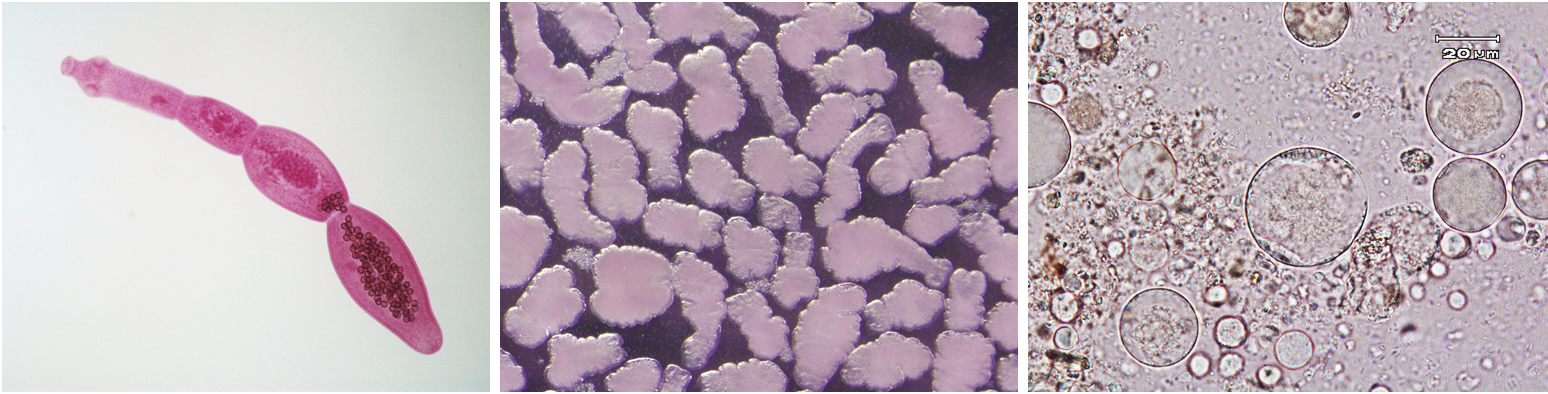
エキノコックス(多包条虫)のエネルギー代謝に関わる遺伝子の発現や機能の解析をおこなっています。エキノコックスがもつ特殊なエネルギー代謝機構を解明し、寄生適応の仕組みをさらに深く理解することを目指しています。
Echinococcus multilocularis is a zoonotic parasite, highly endemic in the northern island of Hokkaido in Japan. We are trying to identify metabolic pathways of the parasite, how they take nutrients from host animals and metabolize as their energy source. Understanding this mechanism could be a novel target for chemotherapy and relevant for the development of effective drug in treating the disease.
国内初の寄生例(Kashiide et al., 2013)から採取された Mesocestoides vogae を使って、試験管内成虫化の試みや遺伝子発現の解析をおこなっています。不明な部分が残されている M. vogae生活環の解明を目指しています。
Our lab has previously reported and isolated Mesocestoides vogae from a pet dog (Kashiide et al., 2013). Currently, we are trying to culture the parasite from larval stage to fully matured adult worm in vitro, which will be useful for maintaining the parasite without the use of host animals. By using this in vitro cultured parasite, we want to further unravel the biology of cestodes.
野外で捕獲された動物(タイワンリス・イノシシなど)や産業動物(牛や豚)、保護動物(犬や猫)を対象に、主に人獣共通寄生虫類の保有状況を調べています。ヒトや動物への感染リスクのある寄生虫の分布状況を明らかにし、疫学情報に基づく寄生虫病制御に貢献することを目指しています。
We are carrying out surveys for zoonotic parasites, mainly gastrointestinal parasites, in both wild (Pallas’s squirrel, Wild boar) and domestic (dog, cat, cattle, and pig) animals in Japan. These data are important in evaluating the possibility of zoonotic transmission and minimizing the health risk to humans and other animals.
〒252-0880
神奈川県藤沢市亀井野1866
日本大学 生物資源科学部
6号館 3階
